Day 3 | James Mackay Hut campsite
Gouland Downs Hut doesn’t really fit with many people’s logistics, so it was unsurprising that I had the hut to myself for the night. That meant a terrific night’s sleep, and I woke to a cloudless morning.
That’s what was ordered. The previous afternoon and evening, I had worked my way through much of the Heaphy Track book that had been left in the hut. It recounted the history of the area and mentioned that blue ducks/whio were often seen around the bridge, not far back on the track. I returned to see if any were in residence, but failed to spot one. You can usually see them sitting on a rock or swimming in fast-flowing rivers if they are around.
Too bad.
I saddled up and made haste to catch up with the others. The sun was out, and this part of the track is very scenic. I’d made a prediction that I might be there by 10 am, and so it worked out.
Just before I reached Saxon Hut, I saw a weka/takahe. It proved to be the latter, and it wandered unconcerned right into my shadow. Up close, it revealed itself to be a takahe chick with its top surface shimmery green and undercarriage iridescent blue. The ungainly legs were orange, but the beak was grey.
Shortly after, I dropped my pack at the hut and followed the bird up to the hut warden’s hut for a close perusal of the unconcerned bird. It was on its lonesome, just mooching about. No wonder they had been on the verge of extinction.
But rather than hang around to get cold, we set off for James Mackay Hut with the clouds having rolled in, followed shortly by mist and then drizzle.
The dampness led to the colours in the forest being more vivid, predominantly green due to the moss and lichen that carpeted the ground and beech trees. The track was easier with crushed granite sand underfoot, mostly, rather than the rounded gravel of earlier in the day.
At Blue Duck Creek, I reminisced about my trip from Kahurangi Lighthouse to the Ministry of Works Hut a few years before. The two nights camping. Heavy rain. My fully soaked sleeping bag. Drying it for three nights in the MOW hut. Then, coming down Monument Creek, and the multiple divots inflicted on my skin. Meeting the Heaphy Track and its more genteel population, who looked askance at an unshaven, beaten-up guy with blood dripping from various parts of his body. I camped just off the track down at the Gunner River, from recollection.
Also, I painted the picture of my brother trying to get warm on a rainy January afternoon by perching above a gas burner at the old James Mackay Hut, burning his op-shop bought woollen pants in the process, and us getting lost in the thigh-deep water at Monument Creek. The track is a highway now. No chance of getting discombobulated in a dense manuka forest.
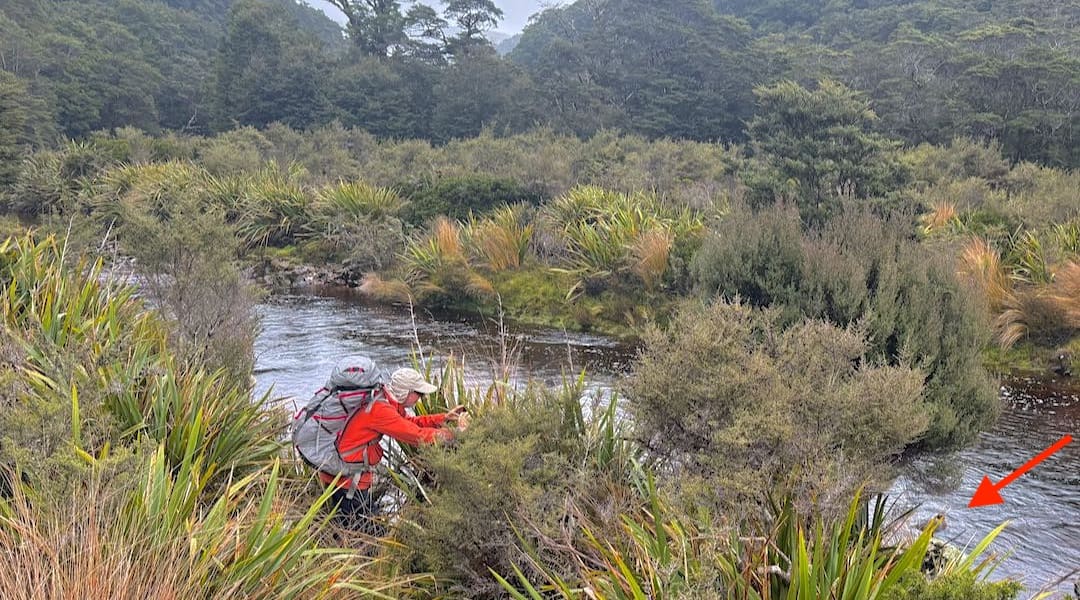
Shortly after, another highlight of the day was the sighting of a rare bird, a blue duck/whio, which also seemed unconcerned by our interest. It was perched on a rock in the creek, and we shuffled down after I had heard its distinctive whistle.
It proved an easy afternoon, other than being more like autumn than summer. More showers, but they didn’t last. It seemed we were getting a repeat of the weather and low temperatures of previous years, despite being midsummer.
My tent was holding up, thanks to a spare tent peg and plenty of electrical tape.
The main feature of camping at both Saxon and James Mackay Huts is that you are required to pitch your tent on one of the three timber decks.
That means camping has all three criteria for a decent campsite: super flat, not at all lumpy, and not damp. No solitude, however.
Fortunately, my tent is self-supporting, in fact chosen for that feature, but all the same, you need some skill to hold it firmly.
This doesn’t sound much, but I’d say it was one of my favourite days of my tramping summer. Good company, no hurry, spotting rare ornithology.