Overseas health experience vs New Zealand conditions
Overseas experience doesn’t always translate directly to the New Zealand backcountry.
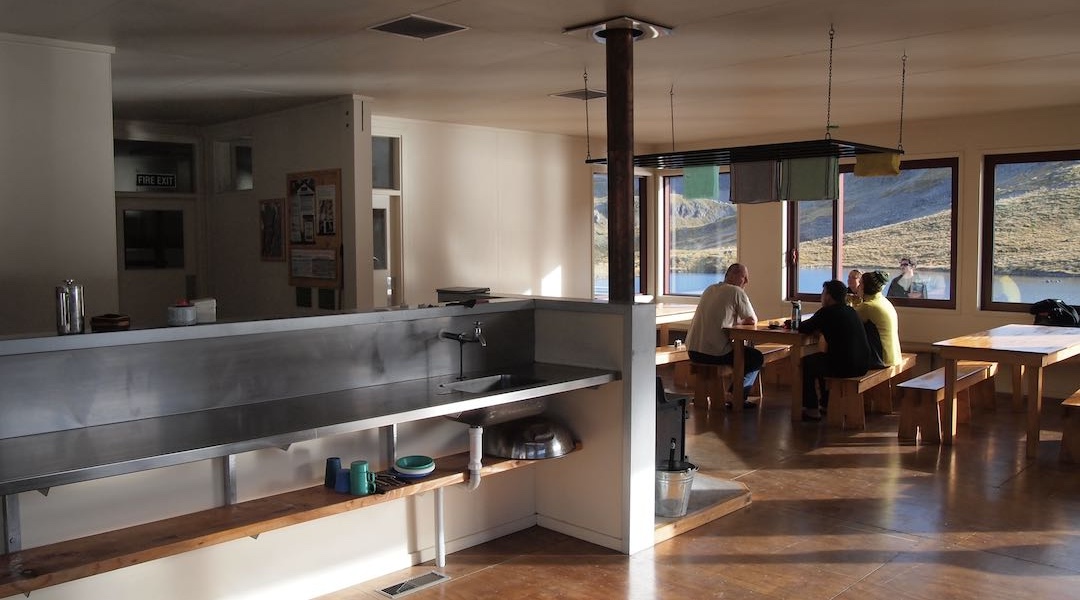
North American hikers are typically dispersed across campsites in tents, socialise in the open, and dig their own catholes. New Zealand trampers can be more concentrated, congregating in huts, using the single longdrop and only watertank tap, and sharing bench space. Rather than the natural social distancing camping provides, the New Zealand hut-based experience is concentrated and communal.
Overseas hikers are trained to fear wild animal waste in the streams, but they arrive completely unprepared for how pathogens actually spread through our crowded hut network. We don’t have bears living and dumping alongside streams, or beavers directly depositing pathogens into slow-moving rivers. Deer and possum numbers are generally low, and they aren’t always carrying human-pathogenic bugs.
Two main environmental factors affect trampers’ health on our tracks.
We get plenty of wet weather because of our maritime climate, even in the middle of summer, which can lead to persistently damp conditions.
We also have a large network of 950+ public huts, and when the weather turns, it makes sense to stay dry inside rather than camp. Sharing confined spaces with others creates the ideal environment for microbes to transfer from person to person. Many popular huts are bookable, ensuring everyone has their own plastic-covered mattress, and there is therefore no need to carry the extra weight of a tent and sleeping mat. Social media tends to popularise some huts and tracks, while others in the next valley over see few visitors.
Huts are where most of the cross-contamination happens. The likelihood of illness in popular huts comes from longdrops and a single rainwater tank tap that everyone touches. Infected trampers can use the toilet, touch the lid and the inside toilet door latch, then walk immediately over to the tap.
Some trampers rely on hand sanitiser that leaves Giardia, Cryptosporidium, or Norovirus unharmed, and just spreads any pathogen across their palms. These pathogens can survive for months in cool, damp, and dark environments. Sanitiser is, of course, very effective against more fragile pathogens like E. coli and Salmonella. Others rinse their hands briefly without soap, which does little, then grab the hut door handle. They wipe the bench down with the permanently damp hut dish rag, which acts as a safe reservoir for microbes by slowing their drying out.
Here’s an ugly thought. Diarrhoea is messy and easily splattered around longdrop seats and floors. It then gets on footwear and is traipsed inside the hut, or transferred to hands when putting them on. And from unwashed hands, it spreads everywhere.
These invisible pathogens can be produced in the billions, but some species can infect a new host with as few as 10 to 100 cysts.
Norovirus is spread by direct human-to-human contact, with no animal reservoir. So rainwater tanks are generally safe from these specific parasites. Tanks can, however, contain Cryptosporidium, which remains viable for months in cool water shielded from direct sunlight. But Crypto and E. coli tend to quickly bind to organic matter, which then sinks to the sludge layer at the bottom of the tank, while the outlet tap is plumbed above that line.A wet tap is the highest-risk surface linking one infected tramper to someone not yet infected.
So, the main health threats are toilets, particularly the latches, and other things you touch, such as the rainwater tank taps, door handles, and benches, including the rotting cleaning rags.
Deer, possums, pigs, stoats, feral cats, etc are a reservoir for infection. But animal infections with the billions of pathogens dumped are not continuous. The animals recover from infections and, much of the time, are healthy, just as in the human population.
Unlike Norovirus, which typically has a 12 to 48 hour incubation period and then hits like a train, Giardia and Cryptosporidium take around two weeks to crank up symptoms. But infected trampers can unknowingly spread pathogens without experiencing symptoms. Or return to the trails too soon after symptoms have disappeared, while pathogen production is still a thing for a month.
It only takes one contagious tramper to infect a hut and potentially dozens of people who then pass through it.