Norovirus | What you also need to know
Yeah, avoid norovirus as well.
Outbreaks are rare, but if the virus is present in a hut, transmission is highly likely, and you are likely to get horribly sick.
Norovirus is unlike the flu or Covid-19. It has a tough coating that alcohol-based hand sanitisers can’t break down.
Unlike Giardia with its long incubation period, norovirus hits like a train after 12 to 48 hours, so you can suffer while still out hiking.
The symptoms are horrendous: sudden, explosive vomiting, watery diarrhoea, and muscle aches. Basically, the full avalanche of viral symptoms. Because of the rapid fluid loss, severe dehydration can make it hard to carry a heavy pack, days away from medical care or a comfortable bed.
But you usually get over it quickly, within 1 to 3 days.
Norovirus is relatively common back in civilisation, particularly in daycare centres and nursing homes. However, this virus affects humans only and doesn’t have a reservoir in wild animals, so pathogens are not sitting in backcountry water sources unless they are contaminated by humans.
Infected humans can produce billions of virus particles, and it takes as few as 10 to 100 to be ingested for them to start multiplying rapidly in the intestines. It is not a respiratory illness because it doesn’t replicate in the lungs, though projectile vomiting can create temporary airborne clouds in a small hut or bunkroom.
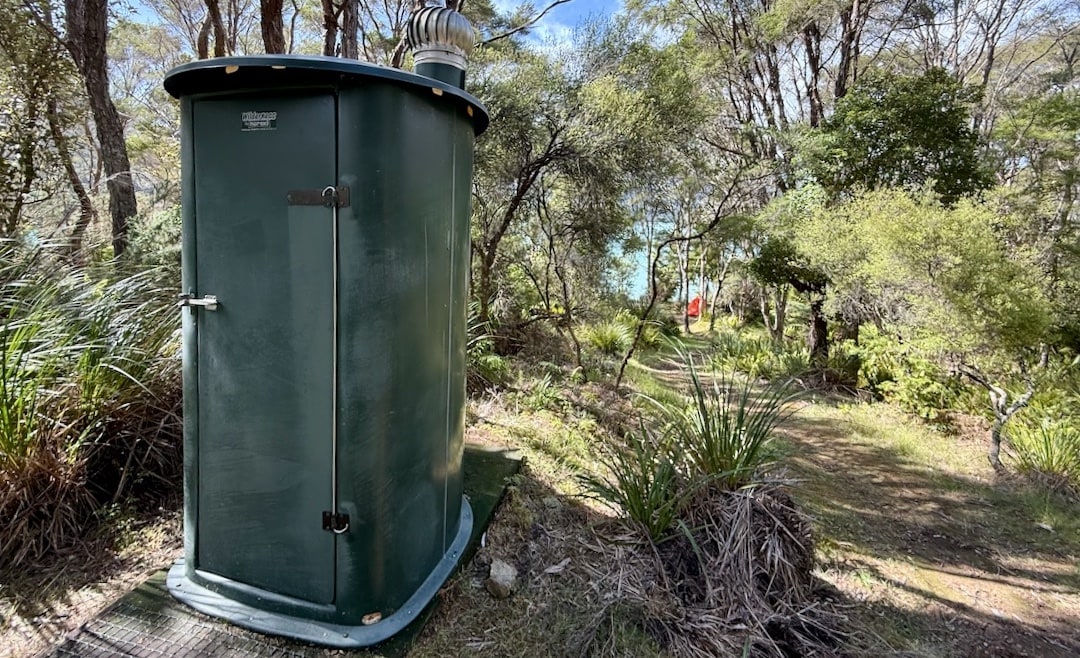
The virus spreads initially through poor toilet hygiene by someone already infected. They can then spread the bug to rainwater tank taps, door handles, benches, plastic-covered mattresses, etc. Its tough protein coating allows it to persist on surfaces for weeks. That makes it extremely contagious in crowded huts, and then it travels to adjacent huts as new trampers arrive at infected huts and carry it to the next. You can get stray diarrhoea on your footwear and spread it around that way once it transfers onto hands. It’s pretty messy!
2017 Travers-Sabine outbreak: In January 2017, 34 people reported severe vomiting and diarrhoea at Blue Lake Hut and the Travers-Sabine circuit. Eliminating norovirus required thorough decontamination. Blue Lake Hut and Travers-Sabine circuit huts were deep-cleaned and sterilised, as well as Hopeless, Cupola, Angelus, and Bushline huts.
There are no antivirals to deal with the virus. You just need to sip clean, safe water and think that things, both good and bad, don’t last. Dealing with rapid dehydration is really important, so replace lost electrolytes, or make your own from a mixture of 6 teaspoons of sugar and 1/2 teaspoon of salt per 1 litre of clean water. The virus is way too small for most water filters (eg, Sawyer Squeeze, Katadyn BeFree, or Platypus QuickDraw) to remove, so boiling, UV, or a minimum 30-minute chemical treatment with Aquatabs or Katadyn Micropur is required.
Despite the quick recovery from symptoms, people can remain contagious for another two to three weeks, although you are most infectious in the vomiting/diarrhoea phase. So, keep up strict hand hygiene for at least two weeks after symptoms resolve.
Remember, hand sanitiser doesn’t eliminate this virus. It just smears it around. Most common surface cleaners are also ineffective. Surface decontamination requires diluted chlorine bleach.
So, what helps control the spread?
It’s an old-fashioned solution.
Wash your hands with soap and water for a minimum of 20 seconds, rubbing between your fingers, and rinsing the virus away in the lather.
The best precaution is to avoid any hut in the area where norovirus is rumoured to be present.